Source reflective waterproof eco friendly dog collar for Training, Home, and Safety
Compare 30 listings of reflective waterproof eco friendly dog collar options featuring nylon and PVC materials with adjustable sizes. Buyers can review specifications for buckle and break-away closures suitable for home and training applications.
Key considerations
Products List




Comprehensive Sourcing Guide
Strategic Sourcing Guide for Reflective Waterproof Eco-Friendly Dog Collars
The global demand for specialized pet accessories has driven a significant shift toward products that combine safety, durability, and environmental responsibility. For procurement professionals seeking reflective waterproof eco-friendly dog collars, the sourcing landscape presents a complex array of options characterized by varying material compositions, closure mechanisms, and customization capabilities. This guide provides a structured approach to evaluating suppliers and products based on verified market data, ensuring that buyers can make informed decisions without relying on unverified claims. The focus remains on identifying products that meet specific functional requirements while navigating the nuances of manufacturing standards and supply chain logistics.
Understanding Material Composition and Functional Attributes
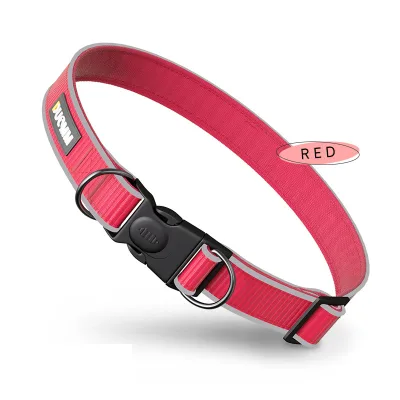
The foundation of a high-quality dog collar lies in its material selection, which directly dictates its performance in wet conditions and its overall environmental footprint. In the current market, Nylon and PVC are the most prevalent materials observed in product listings. Nylon is frequently cited for its strength and flexibility, often treated to achieve waterproof properties. Products utilizing Nylon webbing, such as those described with "3M reflective Nylon Webbing," offer a balance of durability and safety. Conversely, PVC-based collars are noted for their inherent waterproof capabilities and ease of cleaning, making them suitable for heavy-duty applications.
When evaluating "eco-friendly" claims, buyers must scrutinize the specific material composition. While some listings mention "Eco-friendly" as a general attribute, the actual material data points to Nylon or PVC. True eco-friendly sourcing often involves verifying the absence of harmful phthalates in PVC or the use of recycled nylon fibers. The observed product attributes indicate that materials are selected for specific features such as being soft, waterproof, durable, and flexible. These characteristics are critical for the comfort of the animal and the longevity of the product.
The closure type is another decisive factor in material performance. The market offers both Buckle and Break Away mechanisms. Buckle collars provide a secure fit for general home and training applications, while Break Away collars are designed for safety, releasing under pressure to prevent injury. The choice between these mechanisms should align with the intended application, whether for active training, daily home use, or outdoor activities where reflective visibility is paramount.
Technical Specifications and Sizing Standards
Precision in sizing is essential for ensuring the safety and comfort of the dog. The available product data reveals a diverse range of sizing standards, including specific measurements and adjustable options. Common size categories observed include Small (S), Medium (M), Large (L), Extra Large (XL), and Extra Small (XS). Specific dimensional standards are often provided, such as S (30-39cm), M (38-47cm), L (45-53cm), and XL (53-61cm). These ranges are critical for matching the collar to the dog's neck circumference accurately.
Width specifications also vary, with observed values including 2CM and 2.5CM. The width of the collar impacts both the aesthetic appeal and the distribution of pressure on the dog's neck. For larger breeds, a wider collar (e.g., 2.5CM) may be necessary to distribute weight effectively, while smaller breeds may require a narrower profile (e.g., 2CM) for comfort. Additionally, some products are listed as "Adjustable," offering a broader range of fit without the need for multiple size SKUs. This flexibility can be advantageous for suppliers managing inventory and for buyers seeking versatile solutions.
Product models such as AL-222, AL-225, DC-002, DC-005, and DC360 represent different design iterations, each potentially optimized for specific features. For instance, the DC360 model is associated with specific size details like "S: 3/4 Inch Width; 12-16inch," highlighting the granular level of detail available in product specifications. Buyers should cross-reference these model numbers with the specific size and width requirements of their target market to ensure compatibility.
Compliance, Certification, and Safety Standards
Navigating the regulatory landscape is a critical component of sourcing dog collars, particularly when safety features like reflectivity are involved. The market data indicates that some products adhere to specific standards, such as "CE" certification or the use of "3M reflective Nylon Webbing." These designations suggest a commitment to safety and quality, but buyers must verify the validity of these claims through independent testing or supplier documentation.
The "Break Away" closure type is a significant safety feature that aligns with industry best practices for preventing strangulation hazards. When sourcing for the "Home" or "Training" applications, the presence of safety features like reflective strips is non-negotiable for evening or low-light visibility. The observed product attributes emphasize "Safety" and "Reflective" features, indicating that these are key selling points. However, the specific standards governing these features, such as ISO or ASTM standards for reflective materials, are not universally listed in the provided data. Therefore, buyers should request proof of compliance with relevant international safety standards before finalizing orders.
Environmental compliance is another area requiring careful verification. While "Eco-friendly" is a sought-after attribute, the specific certifications (such as OEKO-TEX or GRS) are not explicitly detailed in the general product listings. Buyers should inquire about the sourcing of raw materials and the manufacturing processes to ensure that the "eco-friendly" claim is substantiated by recognized environmental standards. This due diligence helps mitigate the risk of greenwashing and ensures that the product meets the ethical expectations of the end consumer.
Cost Drivers and Minimum Order Quantity Analysis
The pricing and order volume requirements are significant factors in the procurement strategy. The observed price range in the market spans from $0.30 to $4.80 USD, reflecting the wide variation in material quality, design complexity, and customization levels. Lower-priced items typically correspond to basic PVC or standard Nylon collars with minimal customization, while higher-priced items may feature advanced reflective technology, eco-friendly materials, or bespoke designs.
Minimum Order Quantity (MOQ) is a critical constraint for buyers. The data shows a broad MOQ range, from as low as 5 units to as high as 3000 units. Some suppliers list an MOQ of 3000, while others offer a "Mini Order Quantity" of 1000 PCS or even lower. This variability allows buyers to tailor their procurement strategy based on their budget and inventory needs. For new market entrants or those testing a new product line, suppliers with lower MOQs (e.g., 5 to 1000 units) provide a lower-risk entry point. Conversely, established buyers seeking economies of scale may prefer suppliers with higher MOQs to secure better unit pricing.
Customization is a major cost driver. The availability of "Any Logo" or "Any Client Design Logo" options allows for brand differentiation but often incurs additional setup costs and may require higher MOQs. The production of custom colors, such as Red, Black, Blue, Yellow, Green, and Silver, also influences the final price. Buyers should negotiate based on the complexity of the design and the volume of the order to optimize their cost structure.
Supplier Evaluation and Logistics Considerations
Selecting the right supplier involves assessing their production capabilities, logistics network, and responsiveness. The observed product data indicates that the majority of suppliers are based in China, a global hub for pet accessory manufacturing. This location offers access to a robust supply chain and competitive labor costs. However, buyers must evaluate the supplier's ability to meet specific quality and delivery requirements.
Shipping options are diverse, with suppliers offering transport by Sea, Air, or Courier services like DHL. The choice of shipping method depends on the urgency of the order and the budget constraints. Sea freight is generally the most cost-effective for large volumes but involves longer lead times. Air freight and courier services are faster but more expensive, making them suitable for urgent orders or samples. The observed "Samples: 7days" lead time suggests that suppliers can provide quick turnaround for prototype evaluation, which is crucial for validating product quality before mass production.
Packaging is another aspect of supplier evaluation. Products are typically packed in Cartons or Export Cartons, with some options available in Bags. The packaging must be robust enough to protect the collars during transit, especially given the potential for moisture exposure. Buyers should verify that the packaging meets international shipping standards to prevent damage and ensure that the product arrives in pristine condition.
Quality Control and Long-Term Procurement Strategy
Implementing a rigorous quality control (QC) process is essential to maintain product integrity and brand reputation. Given the functional requirements of "Waterproof," "Durable," and "Soft" attributes, buyers should establish clear QC criteria before production begins. This includes testing for colorfastness, tensile strength, and the effectiveness of the reflective material. The "Condition: New" attribute implies that products should be free from defects, but visual inspection alone is insufficient.
Long-term procurement considerations involve building a sustainable relationship with suppliers who can consistently deliver high-quality products. This includes monitoring the supplier's ability to adhere to agreed-upon standards, such as the "CE" certification or specific material compositions. Buyers should also consider the scalability of the supplier's operations to accommodate future growth. The availability of "Customization" and "Logo" options suggests that suppliers are willing to adapt to changing market demands, which is a positive indicator for long-term partnerships.
Furthermore, buyers should plan for inventory management strategies that account for the diverse size and color options available. With sizes ranging from XS to XL and colors including Red, Black, Blue, Yellow, Green, and Silver, maintaining a balanced inventory is crucial to meet customer demand without overstocking. The "Adjustable" size options can simplify inventory management by reducing the number of SKUs required.
Comparative Analysis of Product Options
To facilitate decision-making, the following table summarizes the key attributes of the observed product categories, highlighting the variations in material, closure, and application.
| Feature Category | Product Type A (Nylon Focus) | Product Type B (PVC Focus) | Product Type C (Adjustable Focus) |
|---|---|---|---|
| Primary Material | Nylon (3M Reflective Webbing) | PVC | Nylon / Mixed |
| Closure Type | Buckle | Buckle / Break Away | Adjustable |
| Key Features | Soft, Waterproof, Durable | Waterproof, Durable | Easy to Adjust, Safety |
| Size Range | S, L, M, XL, XS | S, L, M, Adjustable | S, L, M, Adjustable |
| Width | 2.5 CM | 2 CM | Variable |
| Application | Home, Training | Home | Home, Training |
| Color Options | Red, Black, Blue | Yellow, Red, Black, Silver | Red, Black, Blue, Green |
| Certification | 3M Reflective Standard | CE | Safety Features |
This comparison illustrates the trade-offs between different product types. Type A offers superior reflectivity and durability, making it ideal for outdoor training. Type B provides excellent waterproofing and cost-effectiveness, suitable for general home use. Type C offers maximum flexibility in sizing, reducing the need for multiple SKUs. Buyers should align their selection with their specific market needs and customer preferences.
Conclusion
Sourcing reflective waterproof eco-friendly dog collars requires a meticulous approach that balances technical specifications, compliance requirements, and cost considerations. By leveraging the observed data on materials, sizing, and supplier capabilities, buyers can navigate the complex market landscape with confidence. The emphasis on safety features like reflectivity and break-away closures, combined with the demand for eco-friendly materials, underscores the importance of thorough due diligence. As the market continues to evolve, maintaining a focus on quality control and sustainable practices will be key to building a successful procurement strategy. Buyers are encouraged to engage directly with suppliers to verify claims and establish clear expectations for product performance and delivery.
FAQs
What materials are used for reflective waterproof dog collars?
The primary materials observed are Nylon and PVC. Nylon is often treated with 3M reflective webbing for safety, while PVC offers inherent waterproof properties and durability for heavy-duty applications.
Which closure types are available for these collars?
Buckle and Break Away closures are available. Buckle types suit home and training applications, while Break Away mechanisms provide safety by releasing under pressure to prevent injury.
Can I customize the logo on these collars?
Yes, customization is available with options for any logo or client design. This allows for brand differentiation, though it may influence the minimum order quantity and pricing structure.
What are the standard size ranges for these products?
Sizes include S, M, L, XL, and XS with specific measurements like S (30-39cm) to XL (53-61cm). Some models also offer adjustable widths ranging from 2CM to 2.5CM.
How does the minimum order quantity vary?
The minimum order quantity ranges from 5 units up to 3000 units depending on the supplier. Some vendors offer a mini order of 1000 pieces for testing new product lines.
What certifications do these collars meet?
Some products meet CE standards and utilize 3M reflective Nylon webbing. Buyers should verify specific safety claims and environmental compliance through supplier documentation before finalizing orders.
Which shipping methods are supported by suppliers?
Suppliers support shipping by Sea, Air, or Courier services like DHL. Sea freight is cost-effective for large volumes, while air and courier options suit urgent orders or sample requests.